🏆 GemmaCacao - Winning Best Project with ElevenLabs at Hacktoberfest Hack Day
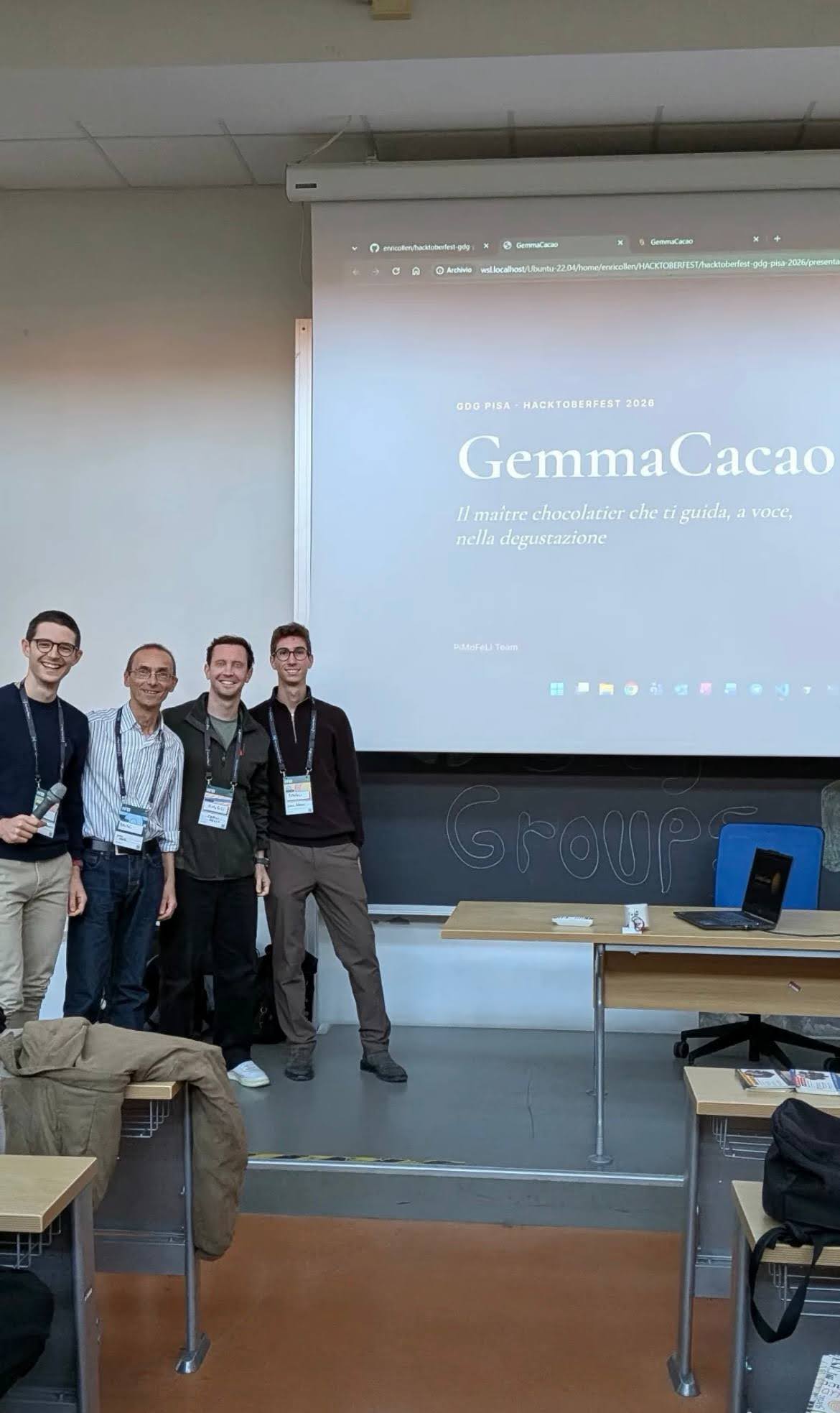
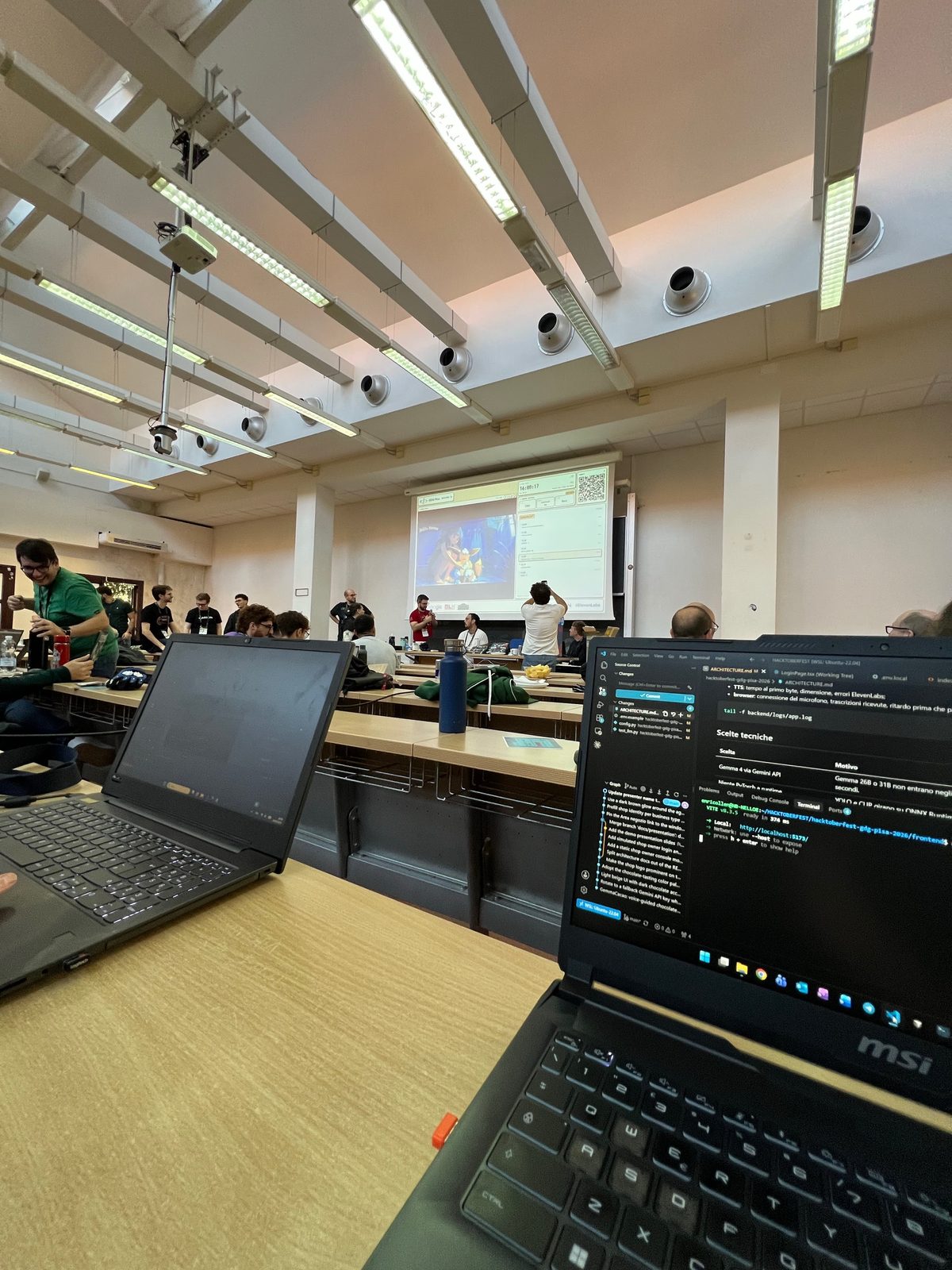
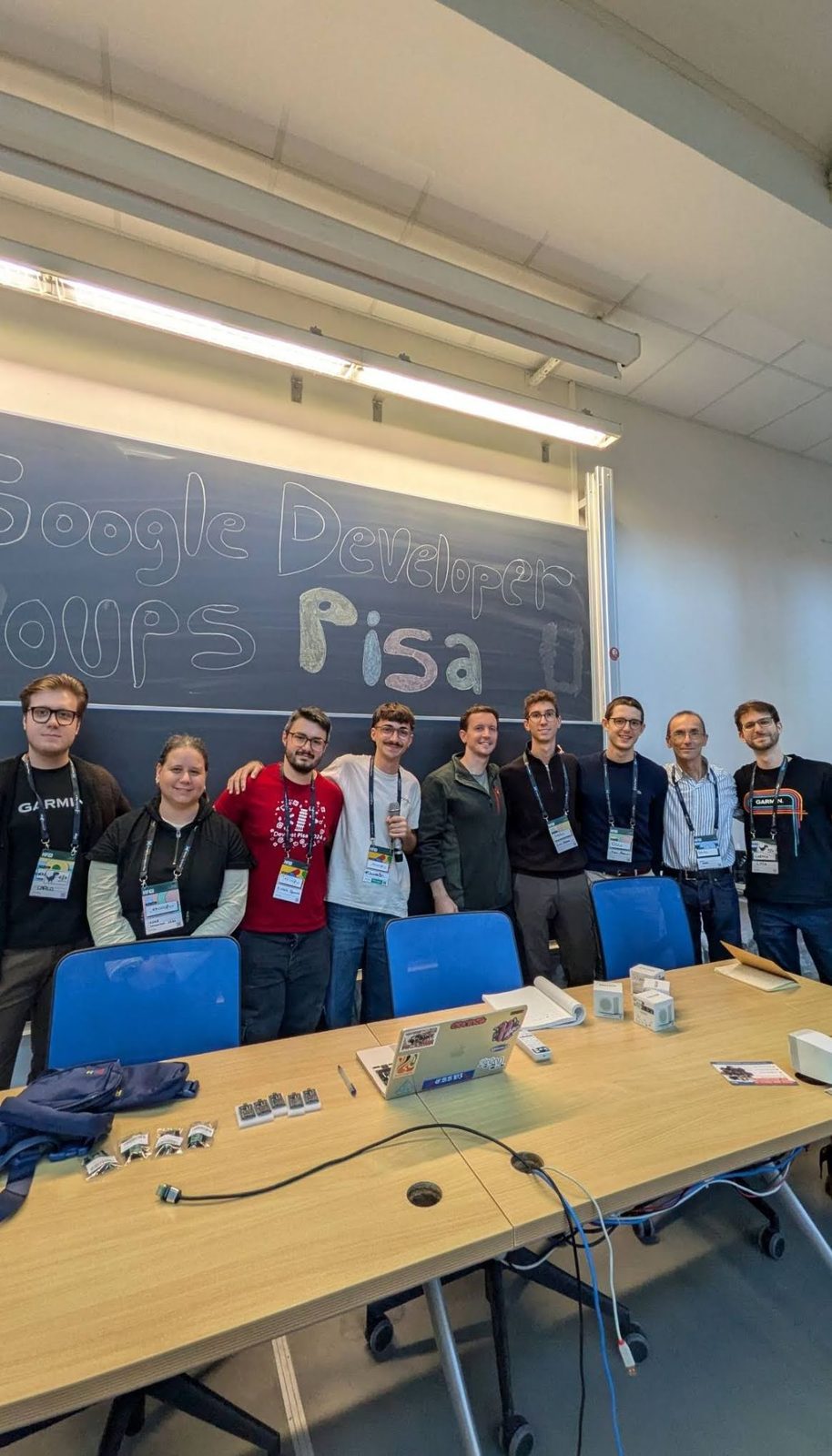
what a day!! on october 24th our team won the Best Project Built with ElevenLabs award at the Hacktoberfest Hack Day organized by GDG Pisa at the School of Engineering of the University of Pisa.
the whole day was dedicated to building with open source AI and open-weight models — a format i really enjoyed: no closed black boxes, just models and tools you can actually inspect, run and hack on.
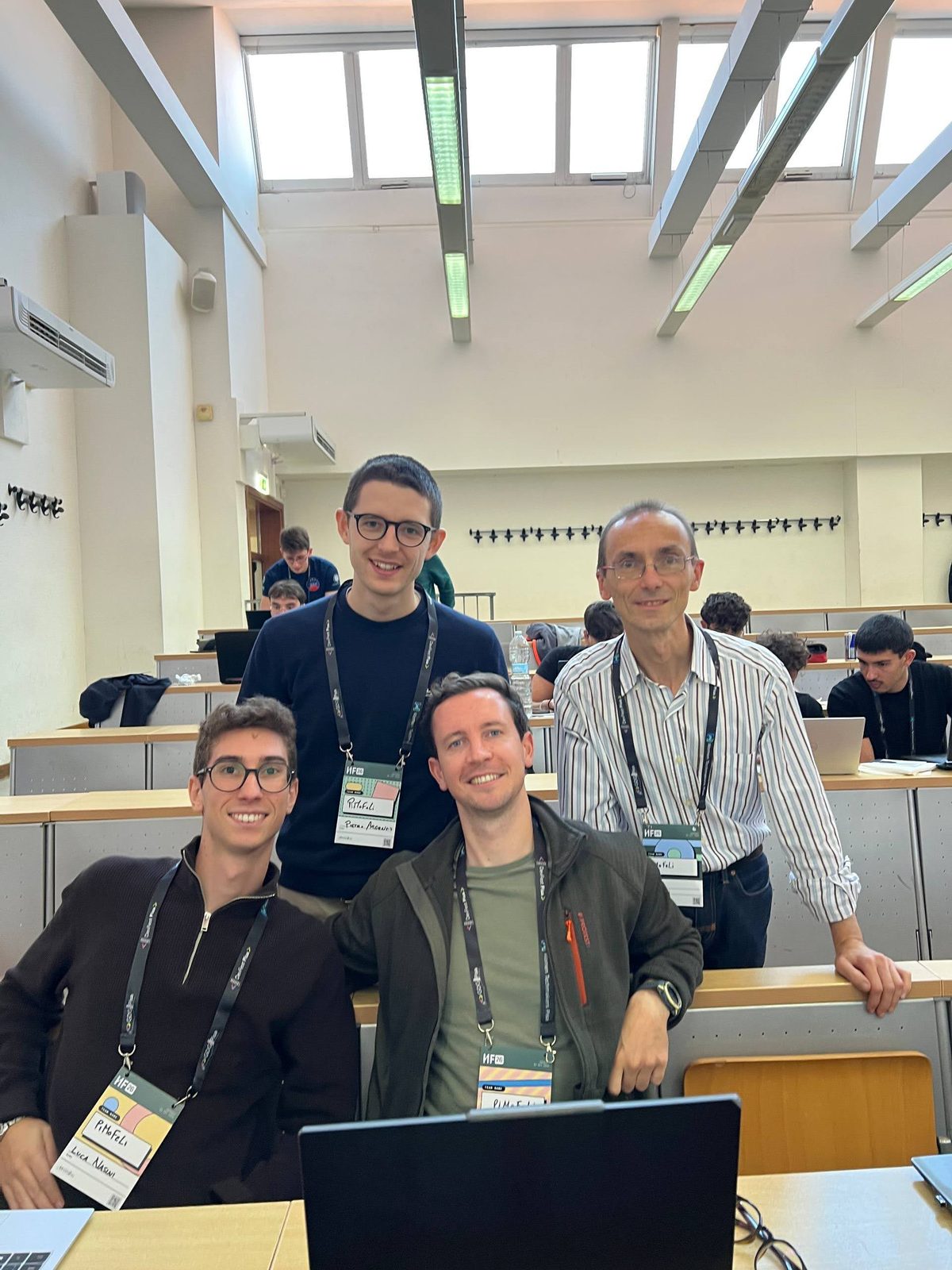
our team — PiMoFeLi — was composed of Pietro Argento, Luca Nasini, Lucio Grenzi and me. the name comes from the province codes of our four hometowns: Pisa, Modena, Fermo and Livorno.
🍫 The Project: GemmaCacao
GemmaCacao is a virtual maître chocolatier — a voice agent that guides you through the tasting of a box of chocolates.
the flow is simple:
- you scan the QR code on the box and land on the web app
- you take a photo of the open box from above
- the app counts and recognizes each chocolate, matching it against the shop’s catalog
- then the real conversation starts: the maître gets to know every person at the table, recommends the chocolate that best fits their taste, collects their comments after each bite, and updates their taste profile before suggesting the next one
- at the end you get a summary with favorites, ratings and the taste profile discovered for each person
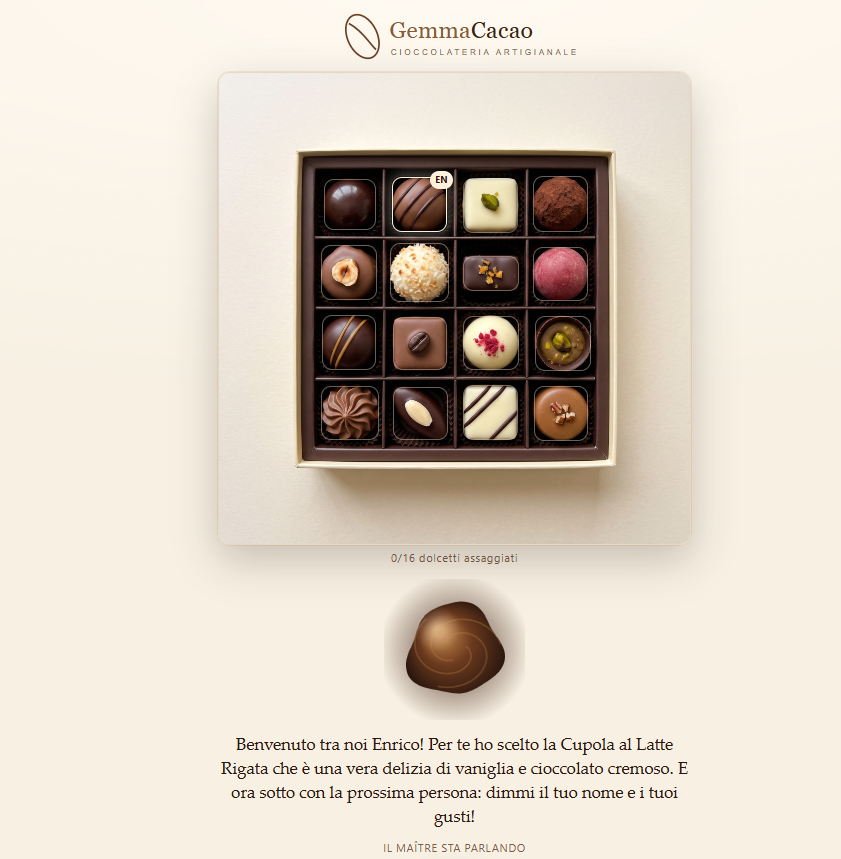
the box after recognition: 16 chocolates matched against the shop catalog, and the maître opening the tasting with a personalized suggestion.
we picked a chocolate shop as our use case, but the same idea works for any food retailer that wants to offer an immersive tasting experience — wine shops, cheesemakers, coffee roasters, breweries and so on. and the shop owner gets something valuable in return: real, structured insight into what their customers actually like.
🧠 How It Works
the system is split into two halves: a vision pipeline that turns a photo into a list of known products, and a conversational agent that runs the tasting.
flowchart TD
    QR["📱 QR code on the box"] --> APP["Web app<br/>React PWA"]
    APP --> PHOTO["📷 Photo of the open box"]

    subgraph VISION ["👁️ Vision pipeline (ONNX Runtime, CPU)"]
        direction TB
        YOLO["YOLOE-26s<br/>prompt-free segmentation"] --> FILTER["Geometric filtering<br/>one box per candy"]
        FILTER --> CLIP["CLIP ViT-B/32<br/>512-dim embeddings"]
        CLIP --> VEC[("sqlite-vec<br/>shop catalog")]
    end

    PHOTO --> YOLO
    VEC --> RECOGNIZED["🍫 Recognized chocolates"]

    subgraph AGENT ["💬 LangGraph conversation agent"]
        direction LR
        W["welcome"] --> L["listen<br/>name + tastes"]
        L --> I["intro<br/>recommend next bite"]
        I --> F["feedback<br/>update taste profile"]
        F -->|box not empty| I
        F --> C["closing<br/>final summary"]
    end

    RECOGNIZED --> W
    GEMMA["🧠 Gemma 4<br/>language extraction + advice"] -.-> AGENT
    AGENT <--> VOICE["🎙️ ElevenLabs<br/>Scribe v2 STT · Flash v2.5 TTS"]
👁️ Recognizing the Chocolates
the recognition step is deliberately not a trained classifier — a chocolate shop changes its catalog constantly, so retraining a model for every new product would be a non-starter.
instead we went for a detect-then-match approach:
| stage | what it does |
|---|---|
| YOLOE-26s (prompt-free segmentation) | finds every candy-like object in the photo |
| geometric filtering | class-agnostic NMS, container/decoration exclusion, size thresholds → exactly one box per candy |
| Pillow | crops each detection with a small margin |
| CLIP ViT-B/32 (ONNX via fastembed) | encodes each crop into a 512-dim vector |
| sqlite-vec | nearest-neighbour search over the shop’s catalog (80% image weight, 20% description weight) |
| greedy assignment | in an assorted box each product appears once, so matches are assigned without duplicates |
on our test box this gave 16/16 candies detected correctly in ~1.2 seconds on CPU. adding a new product to the catalog means uploading one photo and a description — no retraining.
both models run on ONNX Runtime on CPU: ~350 MB of footprint instead of the ~6 GB a PyTorch stack would have required. that mattered a lot on hackathon laptops.
💬 The Conversation
the agent is a LangGraph state machine with five phases:
| phase | purpose |
|---|---|
| welcome | triggered once the photo is recognized and the group size is set |
| listen | captures each participant’s name and taste preferences |
| intro | generates the personalized recommendation for the next bite |
| feedback | parses the comment after the tasting and updates the taste profile |
| closing | wraps up with the final summary when the box is empty (or on request) |
the design principle we stuck to: the code decides the flow, the LLM handles language. Gemma takes care of extracting names, tastes and allergies from free-form speech and of generating the advice; routing, validation and termination are deterministic. this is what kept the demo stable on stage.
conversation state is persisted in a SQLite checkpoint database, so the tasting survives a page reload — which, in a room full of people passing a phone around, is less of a detail than it sounds.
🛡️ Robustness
a live demo in front of a jury is the worst possible moment for a rate limit, so we built in a few defences:
- redundant LLM calls: parallel Gemma requests with a 20s timeout and a fallback API key on rate limits
- rule-based fallback (
agent/rules.py): extracts name, tastes, allergies and ratings without any LLM call - bounded interaction: the name is asked at most 3 times (then it falls back to “Guest N”), feedback once — the flow never gets stuck on a participant
- recommendation validation: code-level checks replace any candidate that is unavailable or conflicts with a declared allergy
🎙️ Giving the Maître a Voice
this is the part that won us the ElevenLabs prize, and honestly the part that changed the feel of the whole product.
- Scribe v2 Realtime for speech-to-text, connected directly from the browser over WebSocket using an ephemeral token issued by the backend — so audio doesn’t make a detour through our server. both VAD and push-to-talk modes are supported, the latter being a lifesaver in a noisy hackathon room (there’s a text fallback too).
- Flash v2.5 for streaming text-to-speech with an italian voice.
combined with Gemma 4 reaching first token in about a second, the result is a tasting that genuinely feels like chatting with a real person rather than querying an app.
🛠️ Tech Stack
- LLM: Google Gemma 4 (
gemma-4-26b-a4b-it, 26B MoE with ~4B active params) —thinking_level="minimal"+ JSON schema validation - agent framework: LangGraph
- vision: YOLOE-26s + OpenAI CLIP ViT-B/32, both on ONNX Runtime (CPU)
- voice: ElevenLabs Scribe v2 Realtime (STT) + Flash v2.5 (TTS)
- backend: Python 3.13, FastAPI + Uvicorn
- frontend: React 19 + TypeScript, Vite, PWA (manifest + service worker)
- database: SQLite + sqlite-vec for vector search
- tooling: uv, Makefile
📁 Project Structure
1
2
3
4
5
6
7
hacktoberfest-gdg-pisa-2026/
├── backend/              # FastAPI server, LangGraph agent, vision pipeline
├── frontend/             # React PWA (photo → detection → tasting → summary)
├── img/                  # sample images and catalog descriptions
├── presentation/         # HTML5 slides used for the pitch
├── ARCHITECTURE.md       # technical deep dive
└── Makefile              # setup & dev automation
getting it running locally is two commands:
1
2
3
cp backend/.env.example backend/.env   # ElevenLabs + Google AI Studio keys
make setup
make dev                               # backend :8000, frontend :5173
then open http://localhost:5173/s/demo.
🎬 Conclusion
building a product that is visual, conversational and voice-first in a single day meant making a lot of hard calls fast — and most of the good ones were about letting code do what code does well and keeping the model where language genuinely helps.
a special thanks to the whole GDG Pisa team for the organization and for bringing such a great event to Pisa 🙏🏻 and to my teammates Pietro, Luca and Lucio for a genuinely fun day of building.
🔗 GitHub Repository
visit the project repository here for accessing the full codebase (if you enjoyed this content, please consider leaving a star ⭐).
📸 Photos